
In May 1919 South Kirkby Parish Council looked into the idea of creating a memorial to fallen residents of the parish, with the preferred option being to build a nurses’ home. South Elmsall Parish Council also wished to memorialise the fallen, though it was undecided over whether to build a service mens’ institute or twenty bungalows for war widows. In July 1920 South Elmsall Parish Council approached the Doncaster Co-Operative Society, in an attempt to purchase a plot of land on which they intended to build a fire station and a war memorial. However, this proposal did not come to fruition and by January 1923 land was being sought from the Carlton Main Colliery Company, with the War Memorial Committee of South Elmsall Parish Council overseeing the transfer of ownership of the land. In February 1923 Messrs. Walker & Thompson (the original architects contracted to the “original scheme” agreed to cease the contract with the War Memorial Committee and the balance on payments was settled, with some monies being refunded to the War Memorial Fund.
By March of 1923 the War Memorial Committee were still publicly calling for the public to submit names to the memorial for inscription, with only 85 names being put forward by family members so far. Again in March the council made the public aware that they had concerns over how few names had been submitted, it was also becoming evident that Earl Haig was not going to be able to perform the unveiling of the memorial. In April the council issued a public notice that names of lost soldiers and seamen needed to be submitted by the end of the month, with a full list of names already submitted by the public being provided in the local newspaper. Later that month Mr Wilfred Bond (the noted architect, based in Grantham) confirmed to the War Memorial Committee that the erection of the monument would be able to take place any time after the 1st of June, as long as all names had been submitted for inscription by the end of April. The committee pressed forward with plans to unveil the monument, sending out letters to the Home Office and the Archbishop of York, requesting attendance for the event.
The committee were dealt a blow in May, when the Archbishop of York declined the offer to attend and dedicate the memorial, due to prior engagements, the Bishop of Beverley was agreed on as the replacement representative. The date of the 2nd of July was firmly agreed as the date of unveiling. At the last moment the committee (so overjoyed by the workmanship) that they agreed to pay an extra £15 to £20 to have the names on the memorial engraved in an ‘old English’ font. The contract for laying down granite chipping around the base of the memorial and “any other minor work necessary” was given to Mr Ernest Fox of South Elmsall, though no length of contract seems to have been agreed upon. Literally days before the ceremony was due to take place the committee were again given bad news, with the Rev. J. W. Greenstreet (the vicar of South Kirkby) informing them that he was unable to attend. The local Catholic church, however, decided they would attend, though they would play no part in the service. The Home Office sent better news, Major General Kennedy would be their representative and perform the unveiling. The final order of the procession was agreed upon.

It was decided by the War Memorial Committee and the Frickley Prize Band that the event should be triumphant in note, rather than mournful, and as such the music for the procession reflected this. Adding to the occasion a platform was built off Dearne Street to house a choir of local school children, conducted by Mr J. Gawthorpe. Another 200 local orphans and war widows were given a place in the procession though the town. The order of the procession was; Frickley Prize Band, Major General Kennedy (and escort), the clergy, orphans and widows, discharged servicemen, others.
The procession departed from the ‘British Legion Club’ on ‘Elmsall Hill’ (now High Street) and marched down the hill and through the town to the memorial, where a large crowd had amassed at the memorial, which had been erected by Messrs. Bowmans & Co. of Stamford. Major General Kennedy performed the unveiling, assisted by Major Montgomery and the monument was dedicated by the Rev. H. F. Elgood (of Darton), the Chaplain of 49th Division. Mr A. Smith (Chairman of South Elmsall Parish Council) thanked the Carlton Main Colliery Company for the land on which the monument was erected “for the gift on behalf of the local authority”. The Rev. R. Jones (Wesleyan) and Rev. G. H. Smith (Primitive Methodist) both offered prayers, buglers from Pontefract performed the last post. Captain Thomas Mottram performed the marshalling duties on the day.
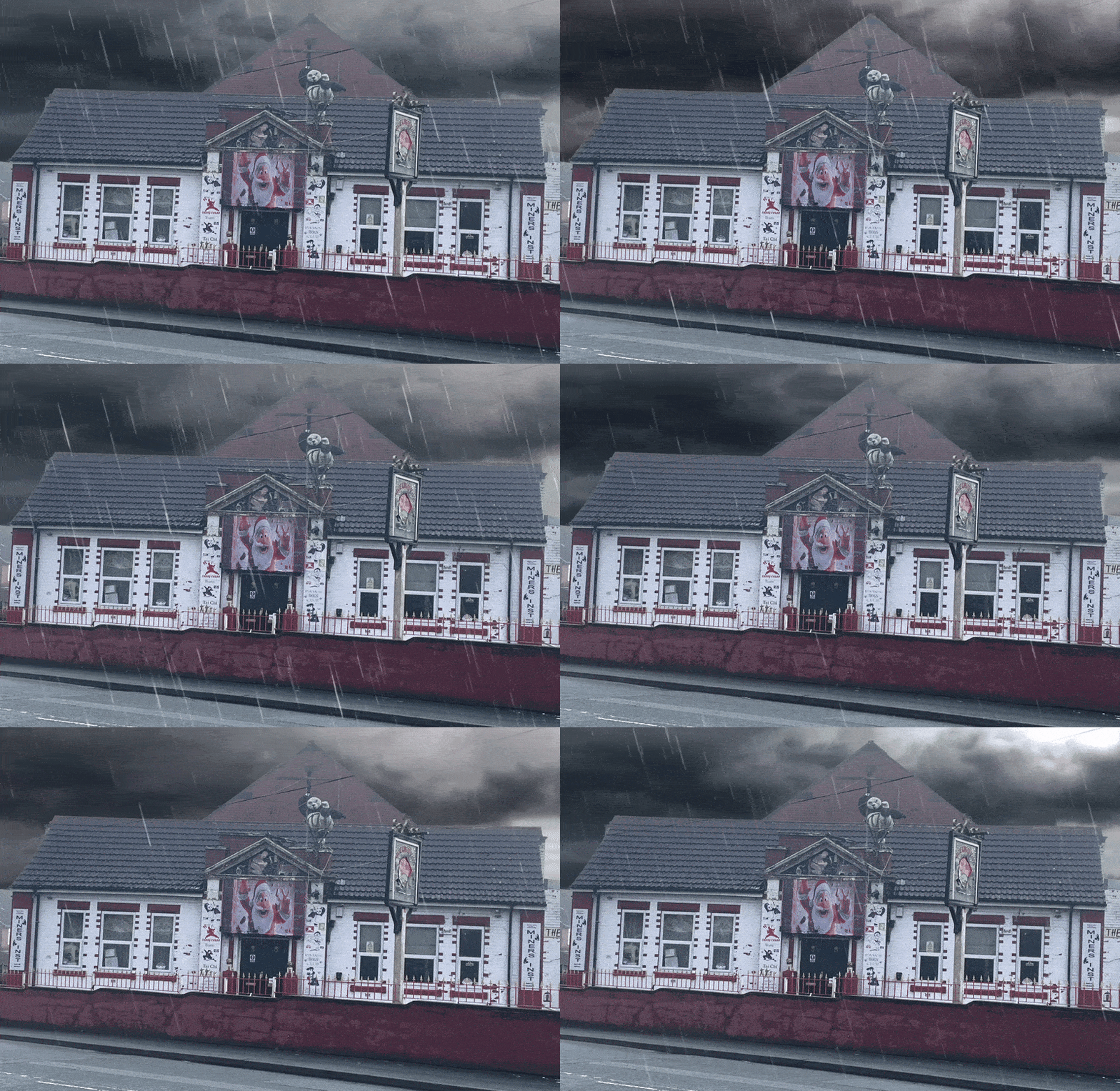
The South Elmsall War Memorial Committee met monthly (often more) at the Miners’ Institute (on Barnsley Road in Moorthorpe). Minutes from the meeting were published locally in the South Elmsall & Hemsworth Express newspaper, as were public notices. The public at the time would have been fully aware of where to go and who to contact regarding the scheme, due to this public consultation via the local press. For example, in the case of the appeal for names to be submitted by the public a full list of names (including rank and spelling of names) was published in the newspaper and time was allowed for the public to make the committee aware of any mistakes or omissions, in fact the committee positively begged for the public to come forward on the matter. The Chairman of the committee was Mr Arthur Smith, the secretary was Mr R. S. Greenwood.
Principally the money for the war memorial was raised via public subscriptions, though noted local landowners were heavily involved in the raising of funds through various means. Correspondence with Mrs S. J. Warde-Aldam on the matter exists and Captain and Mrs Addy of the Carlton Main Colliery Company also were heavily involved. In July 1923 this led to an interesting situation when the War Memorial Committee raised concerns over a suspected ‘missing’ £100 gift from the Carlton Main Colliery Company. It was found that the money had instead been given to the ‘Peace Celebration Fund’ and was already spent by them in that cause. Mr Tom Parsons and Mr A. Goddard were appointed by the committee to investigate the matter and find the deficit in the funds. This issue rumbled on until September, when Captain Addy ensuring that the colliery company donated a further £50 to the fund and he himself adding a further £10, making the Parish council very happy. As of September the committee reported that they were a mere £22 from settling all outstanding costs from the scheme. The costs were publicly reported to have totalled £412 10s.
It is without question that South Elmsall Parish Council (now South Elmsall Town Council) went to great lengths to consult publicly with the families of lost soldiers and seamen when the memorial was being planned. The council published some of the minutes of meetings from the committee in the local press, alongside other public notices and invited the public to respond. However, it is quite obvious from those published minutes and public notices that the Parish council were aware of, and even concerned by, a lack of information coming from the public, for whatever reason. It is worth noting that the village of Moorthorpe is home to St. Joseph’s Catholic church and school and then had Catholic strong links, as it does today. Something which is lightly hinted at in newspaper coverage of the dedication ceremony is that the Catholic community all but removed themselves from the service or were excluded, unlike the Church of England, Methodists and Primitive Methodists who sent official representation to the dedication and to publicly give prayers. Further to this apparent lack of involvement on the part of the Catholic church there appears to have been some satisfaction at the committee meeting, when the news of the Catholic non-involvement in the dedication ceremony was read aloud.
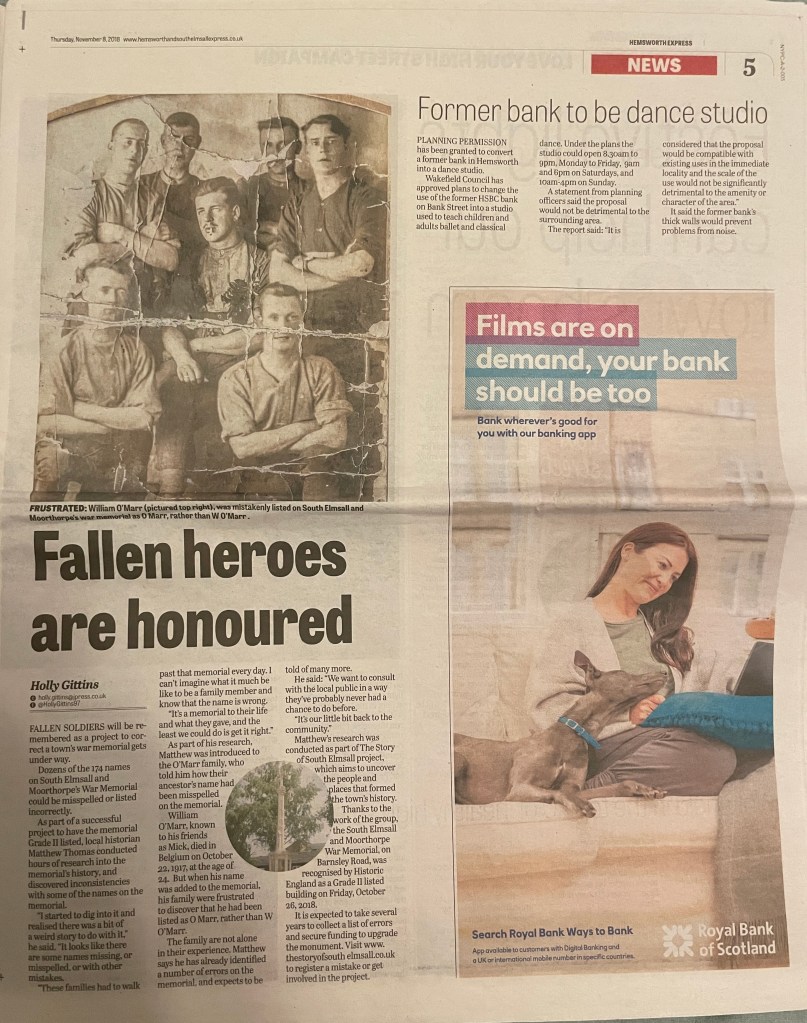
Added to this is the curious case of Gunner W. O. Marr, as inscribed on the memorial as of 2016. Gunner Marr was actually known by the surname O’ Marr, who are a family with connections to the area to this day. According to the family’s own oral history the O’ Marr’s were a Catholic family until the 1920’s or 1930’s, at which point Lawrence O’ Marr (himself awarded the Military Medal) for some reason left the Catholic church. Lawrence was the brother of William. In April 1923 the committee published a list of names in the local newspaper of servicemen who had been killed in the war, submitted by the family and friends of those who had fallen. On that very list William is also listed as Gunner W. O. Marr. It is worth noting that this was against the backdrop of unrest in Ireland, with the Government of Ireland Act 1920 and the creation of the Irish Free State in 1921 there were ongoing troubles between the IRA and British Army, all feeding into anti-Catholic sentiment in England and life must have been difficult in Catholic communities in rural Parishes. William was killed on the 22nd of October 1917 at Ypres, Lawrence returned to the area and married. As of September 2016 the war memorial in South Elmsall was still incorrectly listed William as Gunner W. O. Marr.
It is clear from the earlier attempts by South Elmsall Parish Council to find land for a memorial that they always intended to own the land on which any memorial was to be erected. The War Memorial Committee, which was created to oversee the project, eventually secured land from the Carlton Main Colliery Company, with the deeds to the land being handed over to the committee immediately prior to the unveiling of the memorial. The deeds were presented by Captain Addy (of Brierley Hall) on behalf of the colliery company. In July South Elmsall Parish Council decided, at their monthly meeting, to write a letter to the colliery company to “thank them officially for the indenture they made to the council…” in “…conveying the land situate at the bottom of Dearne Street to the council…” However, it was noted that Councillor Winterburn (then responsible for the war memorial project) had not yet received the deeds which had been given to the War Memorial Committee by Captain Addy on the day of the unveiling. The issue of ownership was settled in September 1923, when at another meeting of the Parish council the issue of adding railings to the memorial site was raised, with it being suggested that “the Parish council might undertake this work, in view of the fact that the site now belonged to them for all time…”
2017 saw the start of a detailed research project to document the history of South Elmsall and Moorthorpe War Memorial, due to concerns raised by local residents about the upkeep of the memorial. One of the local families, the O’Marr family, had contacted both South Elmsall Town Council and South Kirkby and Moorthorpe Town Council and also the local authority, Wakefield Council, to enquire as to the possibility of correcting the name of their relative, William O’Marr, without success, and approached me for assistance. In 2018 the research paper was completed and submitted to Historic England, who agreed with the findings that the memorial deserved listed status, and as a result of a listing application made as part of the submission, South Elmsall and Moorthorpe War Memorial was given Grade II listed status protections, and the O’Marr family were able to have the incorrect inscription of Gunner O’Marr corrected.
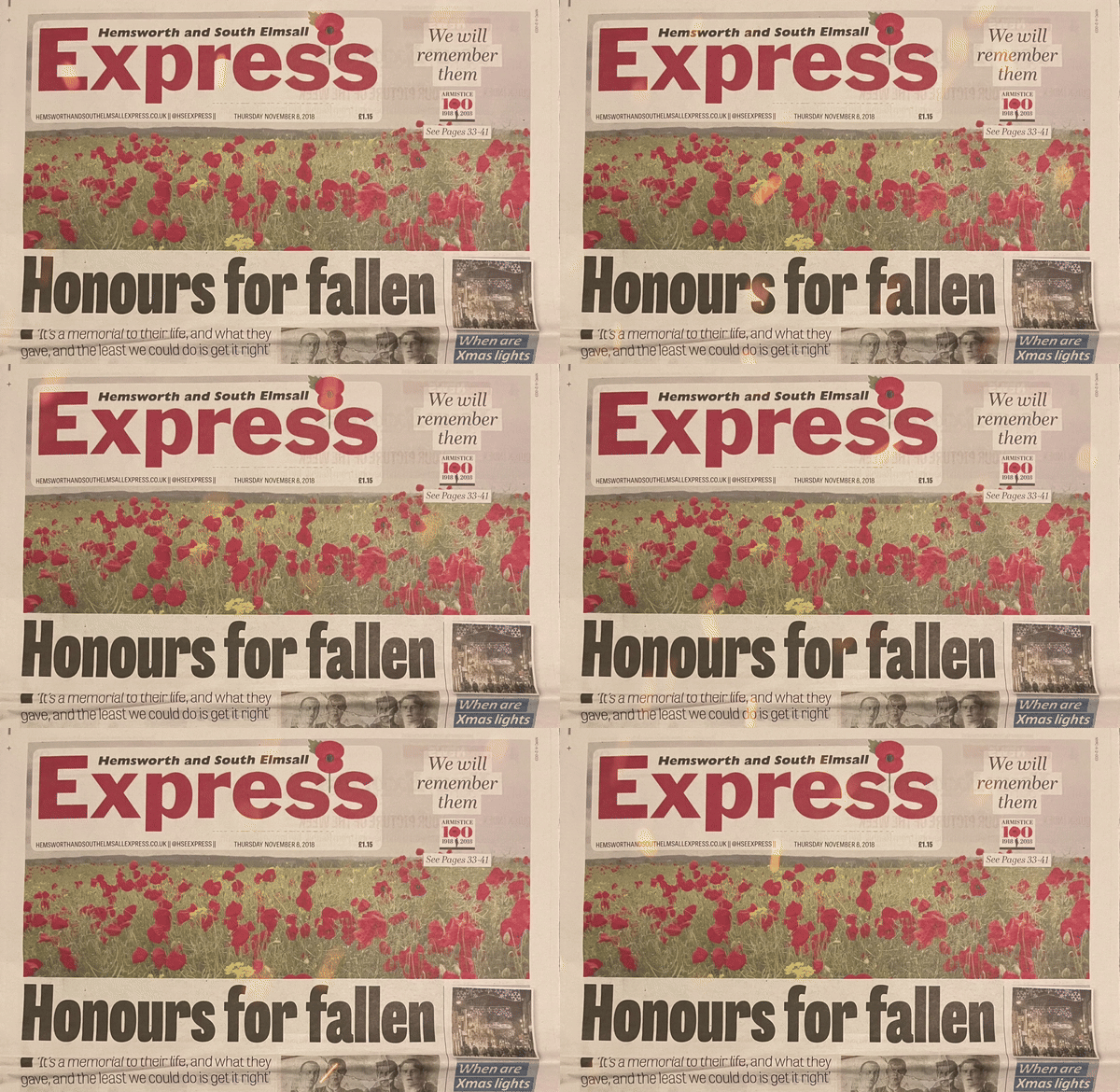
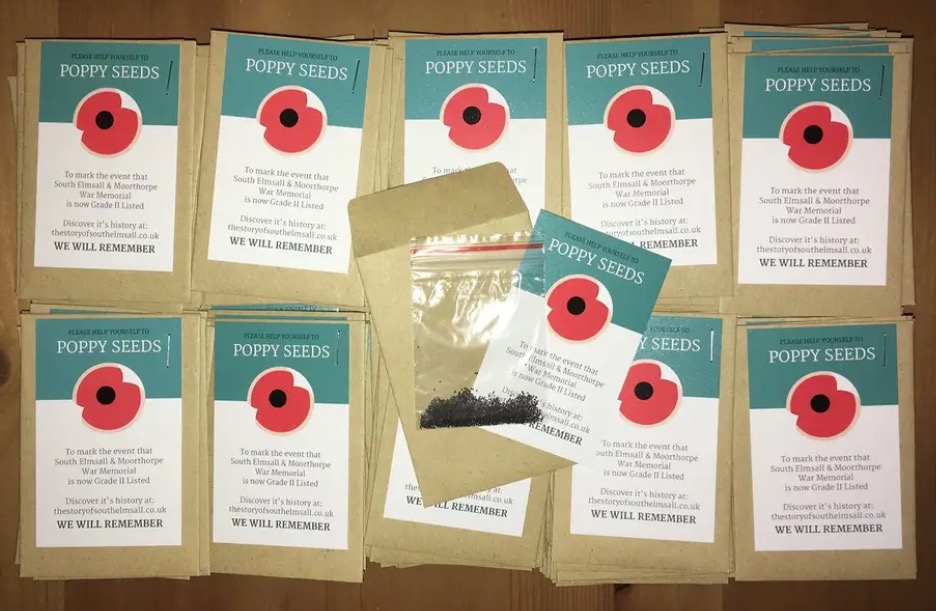
As part of the project consultation was held with the local community in a number of innovative ways, including a display in the local library, on Barnsley Road, discussion online and the research and listing decision covered by the Hemsworth and South Elmsall Express. To celebrate the listing status being granted packets of poppy seeds were given away in a number of local shops and community hubs, and i attended a fund raising event with the Royal British Legion on South Elmsall market to reflect on the successful project with the wider community, celebrating that the South Elmsall and Moorthorpe War Memorial was given Grade II Listed status by Historic England.


 The Story of South Elmsall