
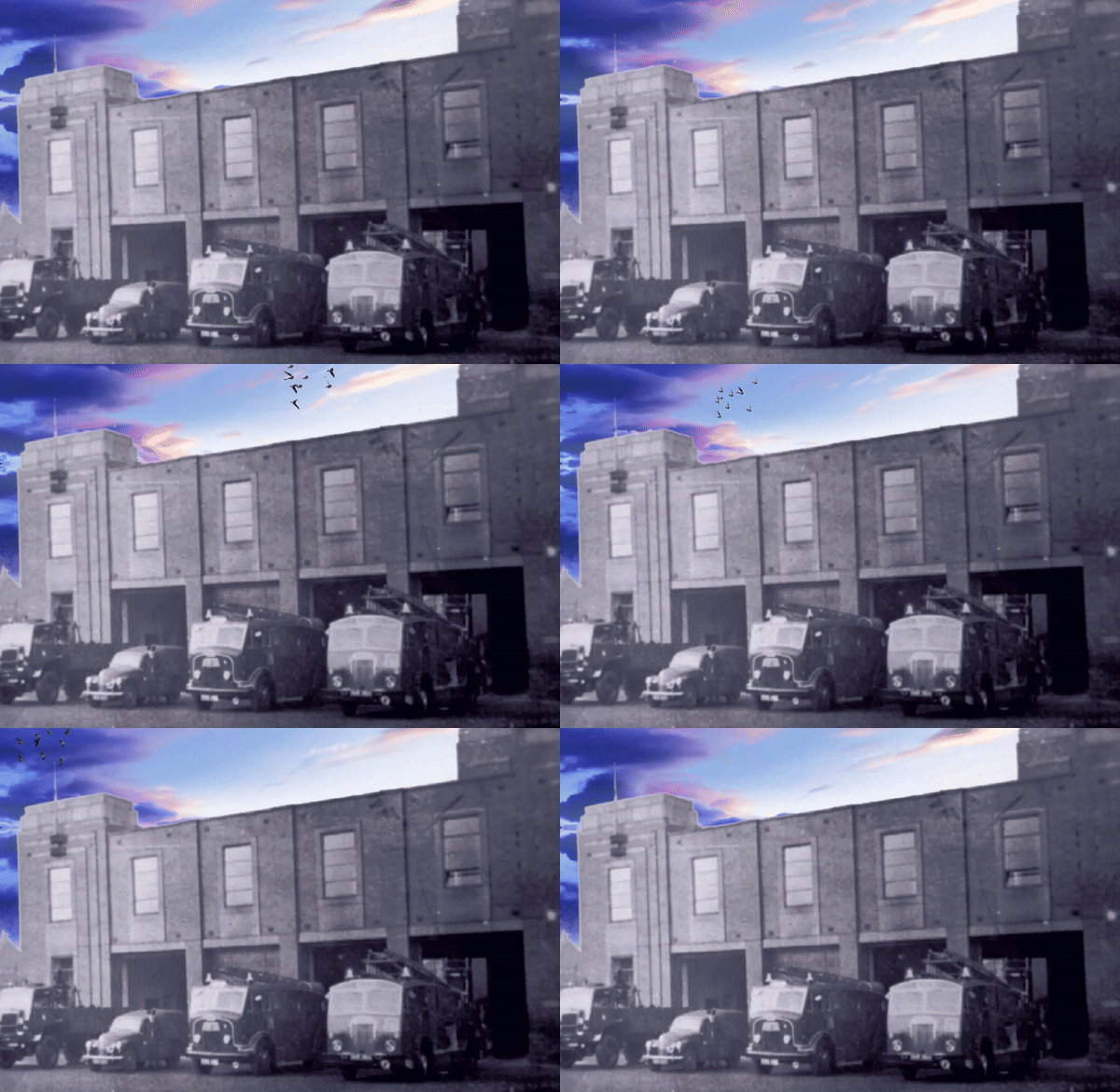
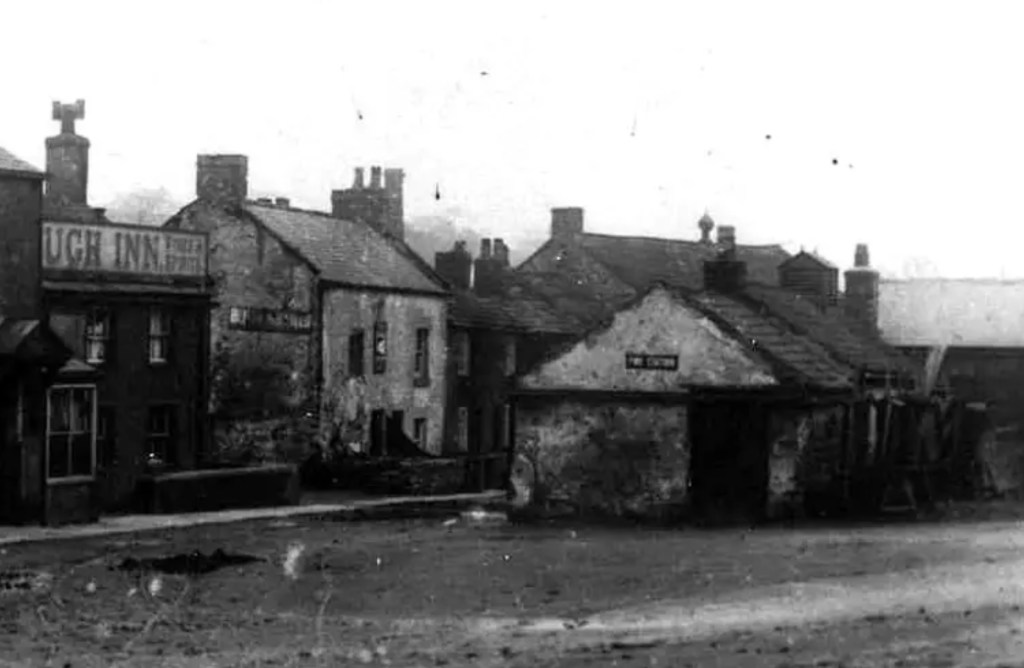
It is curious that what many generations of the area referred to as South Elmsall Fire Station (the latter, now demolished building where Aldi is currently located) was not actually in the town of South Elmsall, but in neighbouring Moorthorpe. Prior to this a smaller South Elmsall fire station house existed to the front of the Plough Inn, on Barnsley Road, but the growth of the area demanded better facilities.
In July 1920 the South Elmsall Parish Council decided to approach the Doncaster Co-operative Society to buy lands from them to erect a war memorial and new fire station, a plan which did not come to fruition. By 1925 South Elmsall Parish Council had joined forces with South Kirkby Parish Council and in August were in negotiations to buy land near Moorthorpe Police Station on which they planned to erect a fire station to serve both councils and their communities. This was part of ongoing attempts by both parishes to claim more urban powers for their respective bodies. These plans at Moorthorpe Police Station were approved in December 1925 and the building (not including the purchase of the land and other expenses) was to cost £1,500. Both parish councils also had agreed that rooms within the station were to be used for both councils to hold meetings.

By 1927 public opinion of the scheme was wavering. In March, at the annual parish meeting at South Elmsall, it was decided that a loan of £3,500 would be sought, meaning a 2d rate for parishioners. Not only was scheme costs rising and locals being asked to pay more rates to cover them but the local view was that parish rates were already too high. Mr T. Tyas, a ratepayer, tabled an amendment that the entire scheme be deferred due to existing high rates but was narrowly defeated. The rising costs were partly due to a revised estimate of £2,500 and also to cover the cost of a motor engine and a motor ambulance, expected to cost £1,000.
By 1939 work on the station was finally progressing, with a new site chosen on Barnsley Road, Moorthorpe, close to the Moorthorpe and South Elmsall border. In July Mr W. A. Clarke, a former member of the Chesterfield Fire Brigade, had taken up duties as Chief Officer of Hemsworth Rural Council’s fire brigade and it was announced he would be based in the new fire station to be built in Moorthorpe. Mr Clarke was a remarkable man, having hailed from Nottinghamshire he was born into a family of engineers. Having left Chesterfield Fire Brigade in 1938 he was appointed by the War Department as Assistant Chief Officer of the Royal Ordnance Factory in Chorley. Mr Clarke held the distinction of having the most ambulance awards of any professional fireman in the nation, alongside many awards from the Royal Life Saving Society. His appointment was something of a coup.
By August the scheme in Moorthorpe was formally approved by Hemsworth Rural Council, with a full time brigade being able to reach all parts of the district within 18 minutes. This new full time force was to replace the part time force that already existed at an annual personnel cost of £1,150. The new station was to be known as Central Station and new equipment to the value of £1,700 was to be placed at it’s command. Alongside this it was proposed that ten houses would be erected nearby to house the brigade and their families. Work was well underway in May 1941 when tragedy struck. A 19 year old labourer, Ronald Edwin Daniels of West Street, South Kirkby fell a full 40 feet to his death whilst working on erecting Central Station.
1949 saw something of a landmark for the area when Central Station was chosen by West Riding County Council as the base for its first fire training school. In February County Officer J. E. Farrell noted that the station was chosen as it was the most modern in the entire Riding and 20 men aged 21 to 28 were sent from across the Riding to be trained. In April Harold Wilson, then President of the Board of Trade was in South Kirkby to open the new Langthwaite Grange Industrial Estate (and the half finished C. & J. Hirst and Sons Ltd factory) and Central Station was chosen as the venue for a luncheon in his honour. Mr Wilson spoke eloquently about the excellent and proud endeavours of the Hemsworth Rural Council in promoting work for women in the area.
However, not all was going to plan. In October 1952 the estimated costs of £20,694 for the building of the proposed ten houses adjacent to Central Station was challenged by members of West Riding County Council. Alderman J. H. Hudson demanded an explanation of the high costs and maintained that no house built by any local authority in Yorkshire cost more than £1,700 yet the new houses at Central Station would cost £2,070 each. Councillor F. Barker noted that he had previously raised the same concerns at a prior meeting and was told that an extra £100 was being spent to provide bay windows to help differentiate between the ranks of the firemen. Alderman A. Flavell (of South Elmsall) argued that it was right that this distinction was made and Lieutenant Colonel F. G. W. Lane-Fox (Chairman of the Fire Service Committee) stated that the costs were not excessive.
Better news arrived in May 1953 when Central Station was chosen as the starting point for the first ever mass start road race in the district, as part of the Coronation celebrations for Queen Elizabeth II. Teams from across northern Britain were to take part, including leading teams from the Riding. Central Station and its men and women continued to act as a focal point for the area and saved many lives until it finally was demolished in 2017, to make way for an Aldi supermarket. This was despite local complaints that it’s national and regional importance should have seen it be given listed status, and it’s demolition was swiftly done before Historic England could assess the dossier of historical evidence being compiled for that process.


 The Story of South Elmsall