
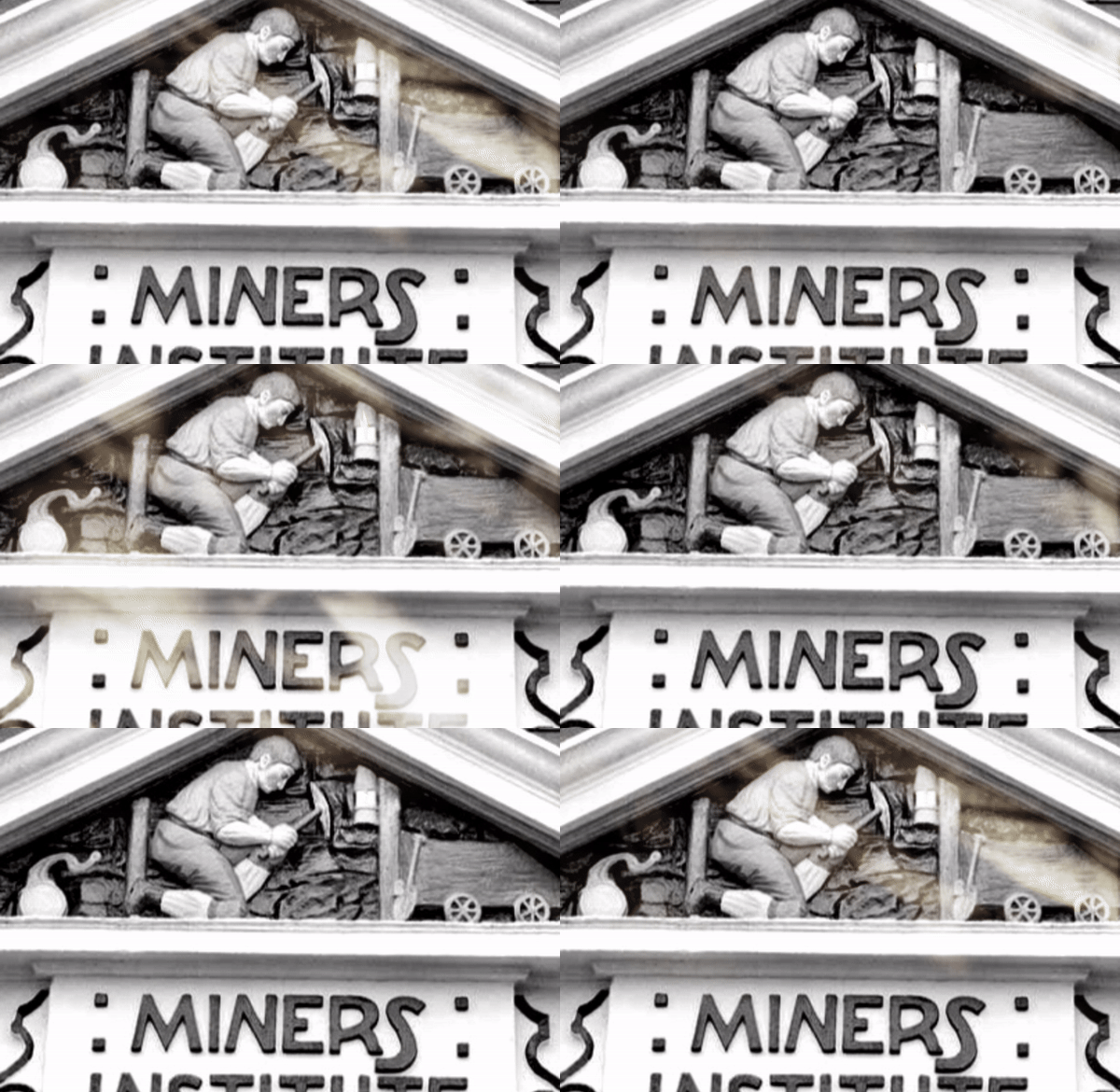
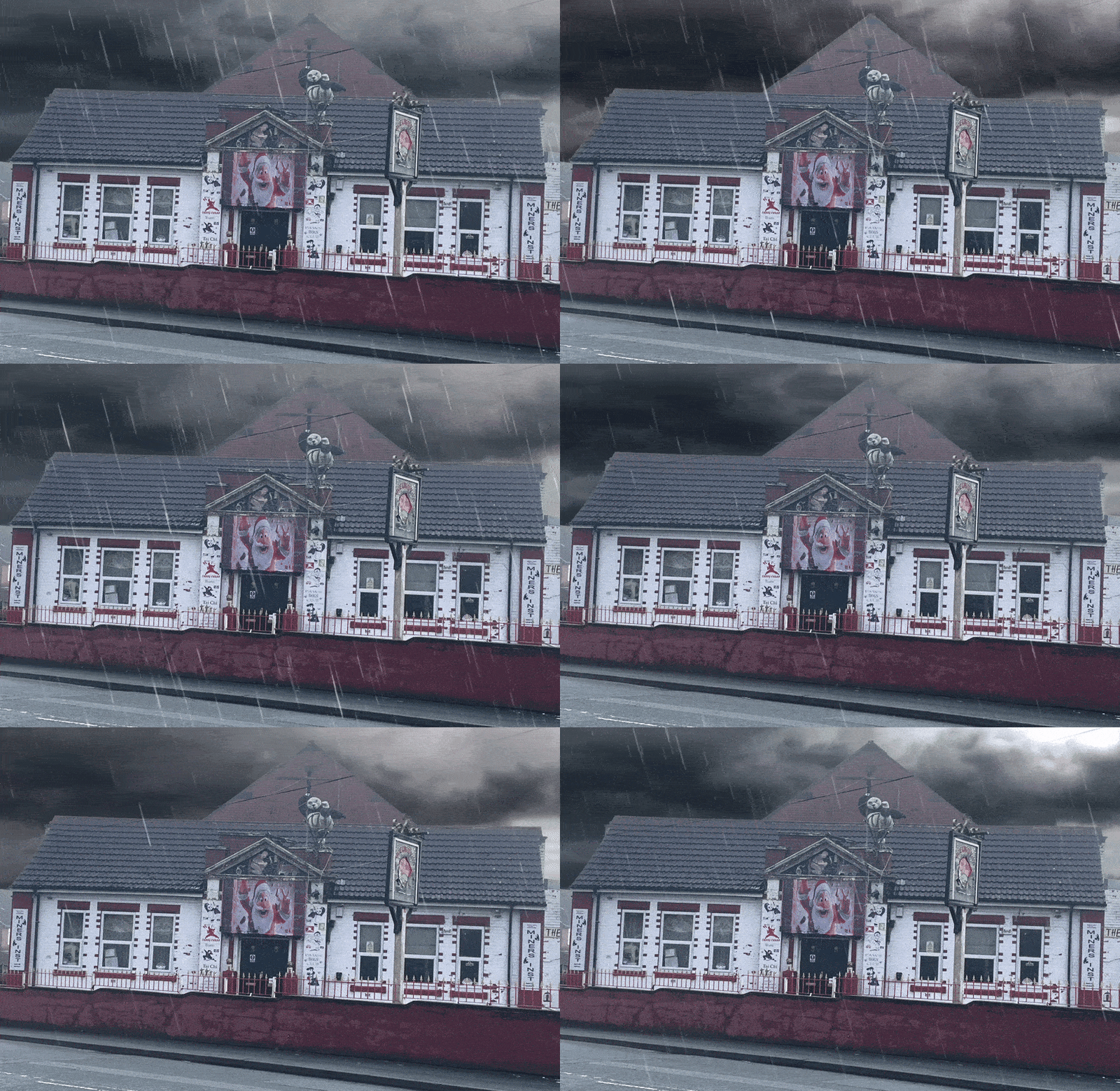
Technically speaking the Miner’s Institute is located in the village of Moorthorpe, which forms part of the Parish of South Kirkby and Moorthorpe, and as such is not in South Elmsall. However, due to it’s close proximity to all three settlements it has been used as a focal point by residents of all three and it merits it’s place here. Above the former main entrance, today damaged by modern signage and in need of urgent restoration, is an elegant stone carved apex, depicting a coal miner with tools.
Buildings contemporary to the Miners Institute which survive today include the Empire Working Men’s Club, Moorthorpe Empire Theatre, Moorthorpe Cemetery Lodge, Moorthorpe Chapel and Moorthorpe St. Joseph’s Catholic Church. All of these contribute to the industrial landscape of Moorthorpe. The Miner’s Institute was constructed in the rush of construction that came with the coming of industrialised coal mining to Moorthorpe and the surrounding settlements and which changed Moorthorpe from a nucleated, agricultural settlement. Despite not having a colliery directly in the settlement of Moorthorpe, the Miners Institute clearly served an important role in the day to day lives of people from surrounding settlements where collieries provided employment. The building was of such high status at one time that it drew in speakers from Sinn Fein, played a part in the funeral of a noted Labour politician and was visited by Labour leader George Lansbury, father of actress Angela Lansbury and the Communist and suffragette supporting politician Edgar Lansbury.
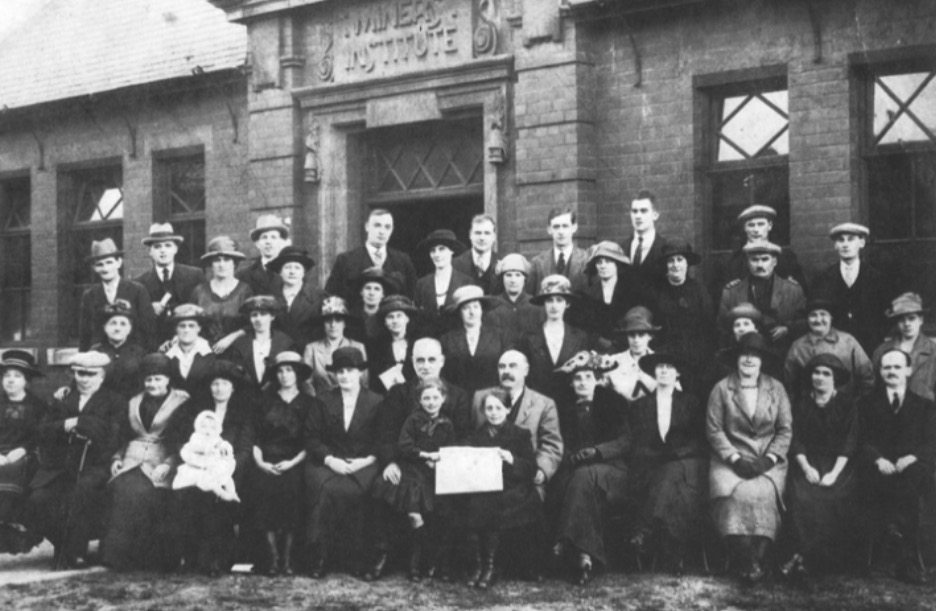
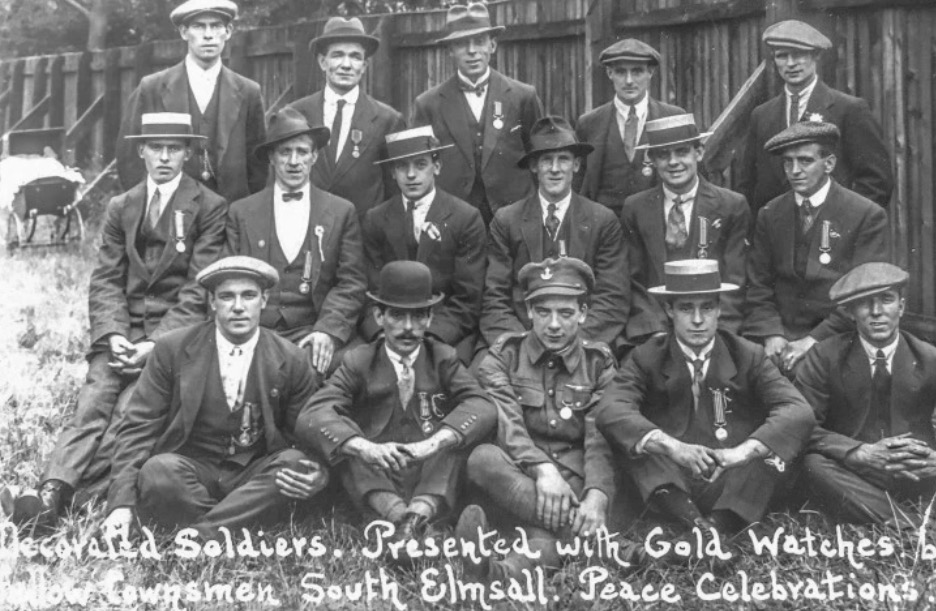
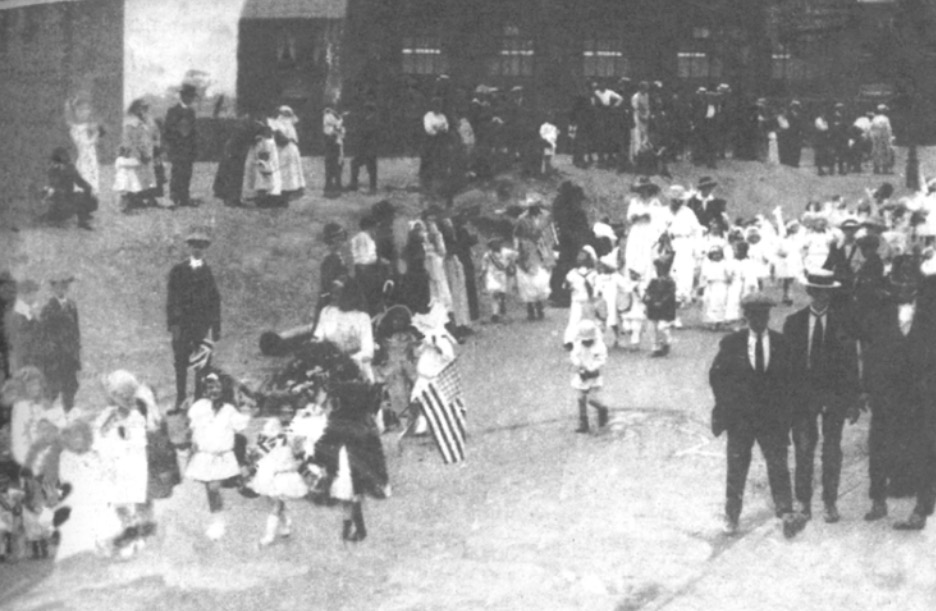
The earliest documented record of the building appears to be in 1914 when the newly built institute was opened by Herbert Smith, then President of the Yorkshire Miner’s Association, later President of the Miner’s Federation of Great Britain. The first Caretaker of the building was Hedley Priestley, who had been a miner at Frickley Colliery but was forced to leave his employment at the colliery due to a head injury. In November 1918 the building was the venue for the presentation of a gold watch to Sgt. F. Krag of South Elmsall. Sgt. Krag, of the Kings Own Yorkshire Light Infantry, was awarded the watch as a mark of respect for being awarded the Distinguished Conduct Medal during World War One. The presentation was noted as being the twenty first made by the South Elmsall D. C. M. Fund, suggesting that the Miners Institute was likely to have been used as a venue for such presentations prior to the one made to Sgt. Krag. The Miners Institute was used as the monthly venue for the War Memorial Trust meetings, in their planning for the erection of South Elmsall and Moorthorpe War Memorial. The institute buildings were used by men from South Elmsall, Frickley and South Kirkby Collieries. One of the key functions of the Miners Institute was as a meeting venue for local political matters. Meetings held by the workforce, unions and other related bodies were a regular occurrence in the hall, especially at times of disaster. As the most widely supported political party, Labour made use of the hall for meetings and functions, in contrast, the building was used by the local Catholic and Irish population of Yorkshire, led by Father McNiff of Moorthorpe, as a meeting point and venue, with a lecture in support of Sinn Fein being given there in 1920. In 1934 the funeral of Gabriel Price, South Elmsall’s “greatest son” was attended by over 20,000 mourners and the procession stopped at the Miners Institute, where the popular Member of Parliament often had given speeches. The National Union of Mineworkers meetings were reported to have drawn usual attendances of around forty men by the 1950’s. Women played a key role in the political use of the building at least as early as 1934, with the Women’s Labour Party having a base there, led by the wife of Gabriel Price.
Sport was a key function, with the Miners Institute having a dedicated football team as early as 1919. Boxing was also a key sport for the Institute, as early as 1930. In the 1950’s the gymnasium was of a high enough standard to host the first round of the National Association of Boys’ Club title competition. One of the quirkier notes on the history of the building relates to the son of the caretaker. In 1940 Arthur Barraclough, a professional footballer with Doncaster Rovers, left his own wedding reception to rush off to Elland Road, where he played against Leeds United. A more sedate activity that was centred around the buildings was the growing of produce in the neighbouring allotments, by South Elmsall and District Allotment Association, the allotments are still present today. Another key role of the building was to provide a venue for dancing. Before 1947 dances were held on Saturdays and in February this popular activity had been extended to Sundays. By 1948 dancing was so popular that an inter-county competition attracted over 600 attendees.
In 2012 the building, being principally used as a martial arts and fitness centre, was listed for sale, with an appeal by the owner, Eamon Timmons, to save the building for the community. In July 2013 an application to convert part of the building into four apartments, with external changes to openings, was approved and in March 2015 a further application for conversion of part of the building to be converted into apartments was also accepted. Whilst large areas of the building have already been converted there are still large areas which survive untouched but following the closure of the local collieries it’s importance as a community focal point has diminished and its importance to the community has been lost.


 The Story of South Elmsall