
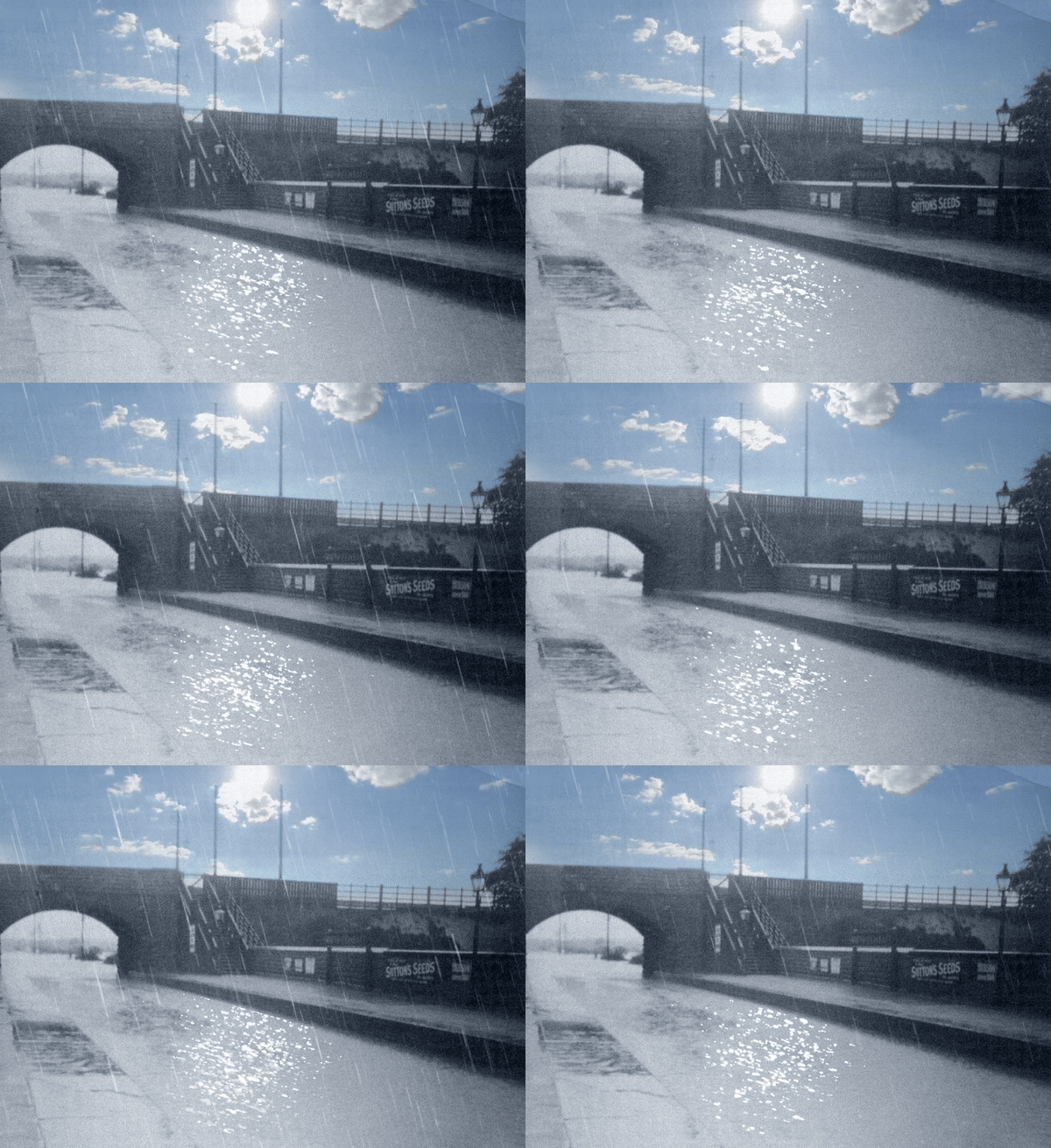
Mention the floods of South Elmsall to locals and most would assume you were talking about the 2007 event, but few would think of the 1932 floods that caused devastation to large swathes of Yorkshire.
The district is criss-crossed with becks and it was the beck that runs through the lowest points of South Elmsall that was the centre of the destruction. A Penistone, Stocksbridge and Hoyland Express report from 28th May 1932 noted that the beck was “usually a sluggish stream a dozen feet wide, it became a turbulent torrent and flowed over the railway and into the gas works”. The railway, in this instance, was South Elmsall railway station and the adjoining gas works. The same article noted that many houses near the beck were flooded, and the gas works itself was under four or five feet of flood water. A Stoker, Mr T. Mills, working at the gas works gave an eyewitness account, to the paper, stating that he had been working at 3am when a “big wave” of water surged into the works, engulfing him up to his waist before he could escape. The drama continued when the gas work’s Manager, Mr J. Patterson of East Avenue, was woken by telephone and rushed to the yard in his car. Mistaking coke floating on the water for the road surface, Mr Patterson drove straight into the floodwater, reaching 4 feet up the car before Mr Patterson realised and escaped the car.
South Elmsall railway station saw the water in the track bed reach the height of the platforms, and the beck, which runs under the station via a culvert, was so high that it was running over the railway lines and undermined them, causing trains to stop temporarily until repairs could be carried out. Of the many buildings flooded were the numerous old cottages around Lowgate and where High Street, Doncaster Road and Station Road meet. The Brooklyn Villas had three feet of water inside, the Railway Hotel cellars were almost full to the top and the terraced rows behind the shopping high street of Barnsley Road were affected, including Whitmore Street, Ivy Terrace and Edna Street, that were under three feet of water.
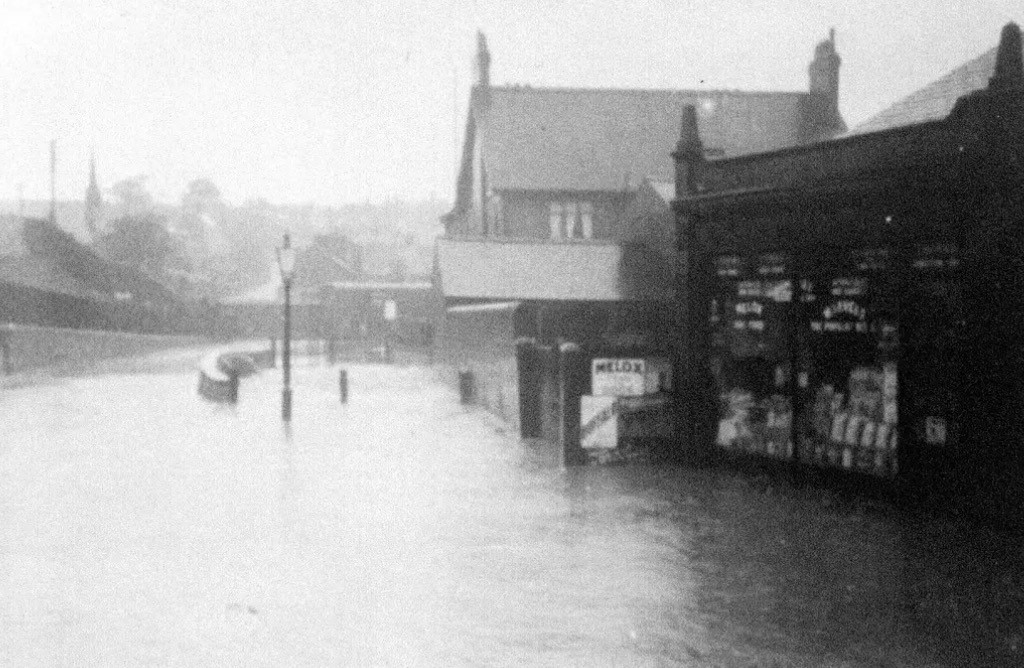

The 15th March 1919 South Yorkshire Times noted that the beck had broken it’s banks and flooded the fields around South Elmsall railway station, with there being three feet of water. In November 1928 discussions were ongoing within the district for plans to extend the sewer lines in South Elmsall, as the population boomed. The 2nd November 1928 South Yorkshire Times noted that Alderman Price, Chairman of South Elmsall Parish Council, made clear that “a large number of houses had been built… …and during flood time there had been much trouble with the sewers in the lower part of South Elmsall.” This particularly proves beyond any doubt that not only did the Council know, in 1932 when asked for compensation, that flooding in South Elmsall was a regular occurrence, but also that the public health risk from sewage leaking into the flood water was very real.
Between 1932 and 1933 numerous meetings were held to discuss the public outcry and potential health risk of continual flooding of Moorthorpe Cemetery. For example, the 18th February 1932 Sheffield Independent reported that at one such meeting Mr W. King, a Councillor, said the situation of flooded graves was “staggering and without parallel in the country” and that “nearly every grave was flooded and a pump had to be used to enable the graves to be completed”. It was also noted that the pump had to be used to clear the route for funeral corteges and the bottom of open graves to be filled with straw so grieving residents would not see the flood water their loved ones were being lowered into. Indeed, a Leeds Mercury article from 28th February 1933 noted that South Elmsall had been cut off from the outside world due to telephone lines being down and Doncaster Road being under a foot of water, due to snow then flood.
On 24th April 1935 widespread flooding led to a front page article by the Leeds Mercury, where it was noted that the gas works and Doncaster Road were under two feet of water. In July 1939 Yorkshire again was hit by catastrophic flooding. The 31st July edition of the Yorkshire Post reported that shoppers in Moorthorpe were stranded when the beck there broke it’s banks and Barnsley Road was under a foot of water, flooding several shops and the Post Office. The gas works were again cut off, and six cottages at the foot of Elmsall hill (High Street) were flooded and under two feet of water. One resident, Mr F. Saunders, bemoaned that his wife had only just finished papering the house, following previous floods.
The Wednesday 19th July edition of the Leeds Mercury noted that four cottages in the same location were due to be demolished, due to being left with a foot of sewage inside them, following floods. However, a 18th August 1939 South Yorkshire Times report noted that since the council’s previous meeting, where it was decided to demolish the cottages under slum clearances, they had been flooded again, and local Councillor King complained that the County Council was not doing anything about the situation. Councillor King this time made clear that it was his view that flooding in South Elmsall was “not abnormal” and bemoaned that every time it happens homes and properties were inundated with sewage. One novel solution proposed was to raise the height of doorways above the flood level, which may well explain the unusual level of drop from the back doors of Teacher’s Row, off High Street!
Not by any stretch of the imagination is the above a full itemisation of every flood event in South Elmsall, but merely a brief look back through some documented incidents, that show that the risk of flood has always existed, and that the 2007 event was part of a long line of flooding incidents, and time and again the same properties and streets are affected.


 The Story of South Elmsall