
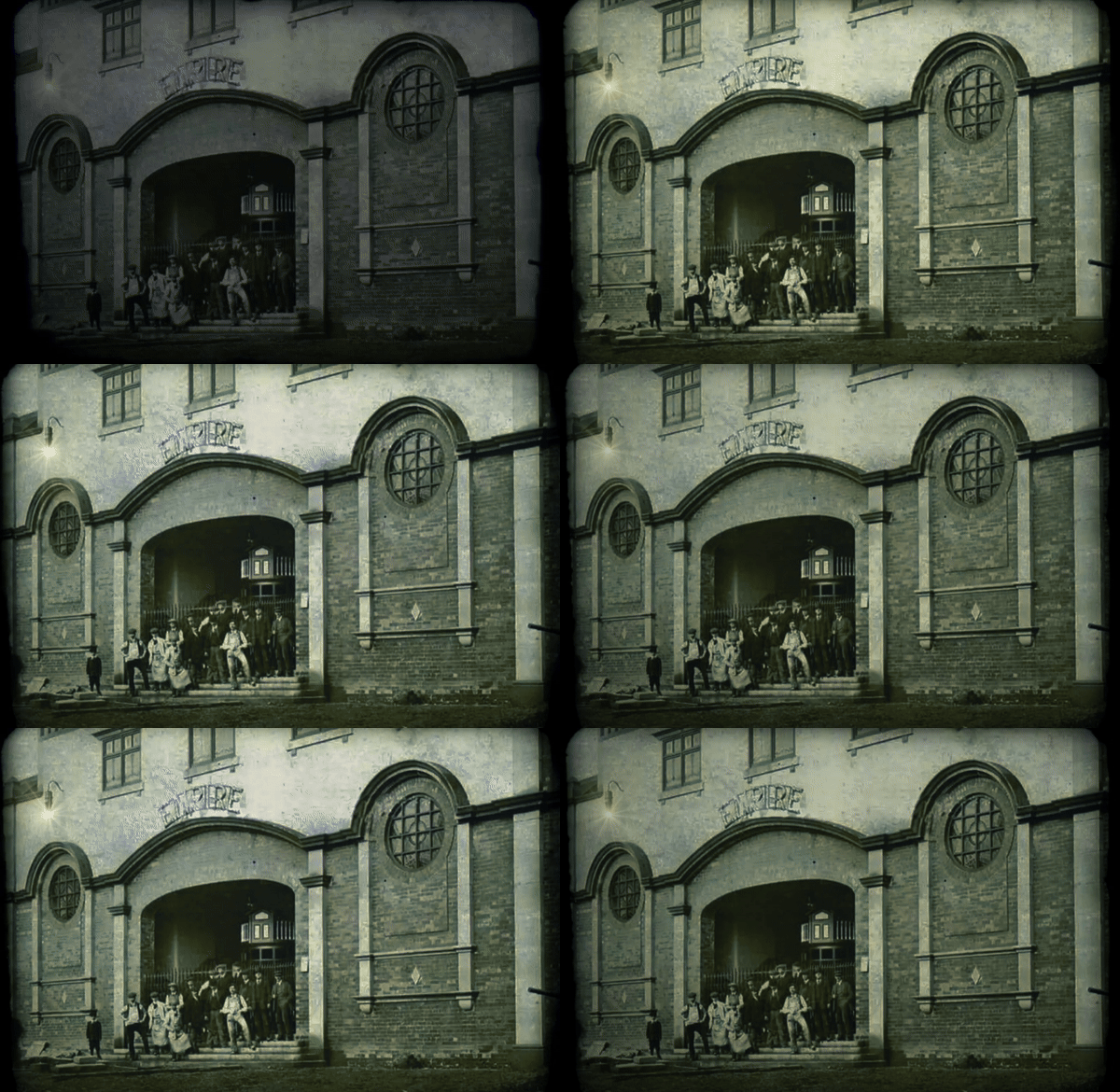
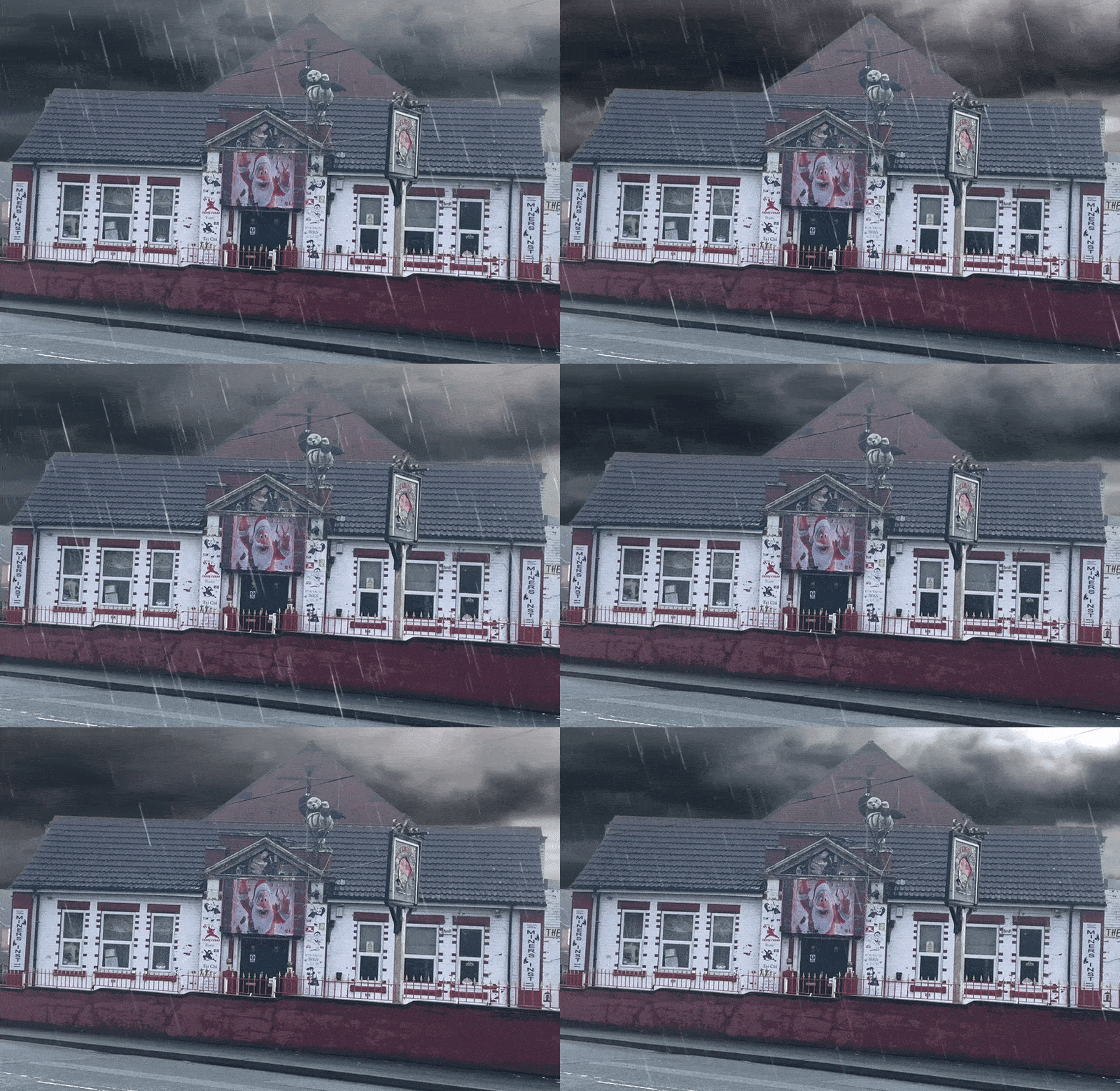
Whilst being located in the village of Moorthorpe, which forms part of the Parish of South Kirkby and Moorthorpe, Empire Theatre was much loved by residents of South Elmsall due to it’s close proximity to the town, as such it is included here. Buildings contemporary to the Empire Theatre which survive today include the Empire Working Men’s Club, Moorthorpe Miner’s Institute, Moorthorpe Cemetery Lodge, Moorthorpe Chapel and Moorthorpe St. Joseph’s Catholic Church, all of which contribute to the industrial landscape of Moorthorpe.
The Empire Theatre was constructed around 1912 and the height of the fly tower would suggest to the casual eye that theatre was the primary or sole intended use. Council minutes show that in 1912 John Thomas Issott appealed to Hemsworth Rural District Council for permission to build The Empire in his role as Managing Director of Empire (Moorthorpe) Ltd. It is suggested that Issott may have been related to Fred Issott of Leeds, who was involved with Kinetoscope parlours as early as 1895, and this possible connection may mean that The Empire was purpose built as a variety venue, with a projection room installed as part of the original construction, with the showing short cinematic films between the acts, though no real evidence for this exists. Interestingly the Picture Palace (Picture House) in Moorthorpe (often incorrectly placed in South Elmsall in research) was opened in 1911 by the South Elmsall Picture Hall Company, of which John Thomas Issott was also Company Secretary. The relationship between the two buildings, or why John Thomas Issott went on to build The Empire within 12 months of the opening of the Picture Palace has not been fully understood, but would support an argument that the Picture Palace was primarily for film and Empire Theatre (with it’s fly tower) being for stage. John Thomas Issott was also a Company Director of the Hemsworth Hippodrome Company, which constructed the Hippodrome around 1911.
In 1915 the accidental death of a six year old girl, Ada Taylor, led to the alteration of the main entrance to the theatre, with the front gates to the building complex being replaced by standard doors. As Ada had been playing on the steps at the entrance the gates fell upon her and caused her death, despite the gates and the theatre building as a whole only having been inspected by the County Council two months earlier. In 1923 tenders were invited for the painting and decorating of the theatre, though the original colour scheme was not known. It is estimated that full conversion to a cinema took place around 1919, based on the fact that similar establishments were known to have undertaken the conversion at that time. It is without any doubt that by August 1919 the building was advertised as a venue to watch films rented from Ideal Film Renting Co. Ltd. of London, though it was listed as the “Empire Picture House”.
The installation of sound took place around 1930 and the Cinemascope was installed in 1957 before the building was converted into use as a bingo hall, around 1968. It is known that, alongside being a cinema, local amateur dramatic groups put on small productions until the 1960’s, though evidence shows that major theatre productions still took place as late as 1925 and 1926 and that the South Elmsall Amateur Society only formed in December 1945, with their first production taking place in February 1946. In 1945 the cinema screen was damaged when a 12 year old boy fired five holes through it, with his catapult. Other uses for the building were common, with the building hosting the South Elmsall Flitch Trial in 1938 and public meetings being a regular fixture. The Empire was managed by Mr Herbert Thorley of ‘Brooklea’, Moorthorpe, from 1928 until his death in 1941. He managed the cinema in connection with South Kirkby cinema, having moved from his position of General Manager of Wombwell Pavilion, where he had been for eleven years prior. A sign of the standing of Mr Thorley was that his funeral was attended by representatives of 20th Century Fox, Paramount, British Lion and United Artists. The building finally closed in 2003 and was subsequently converted into residential dwellings by 2006.


 The Story of South Elmsall